Small School, Big Community
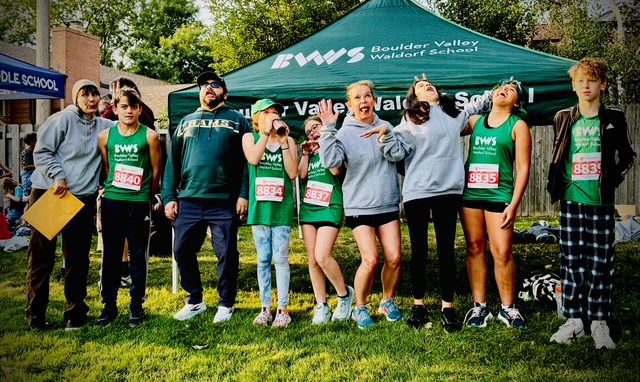
Children thrive when they are seen and valued by the people around them. At Boulder Valley Waldorf School, we build community on campus in many ways.
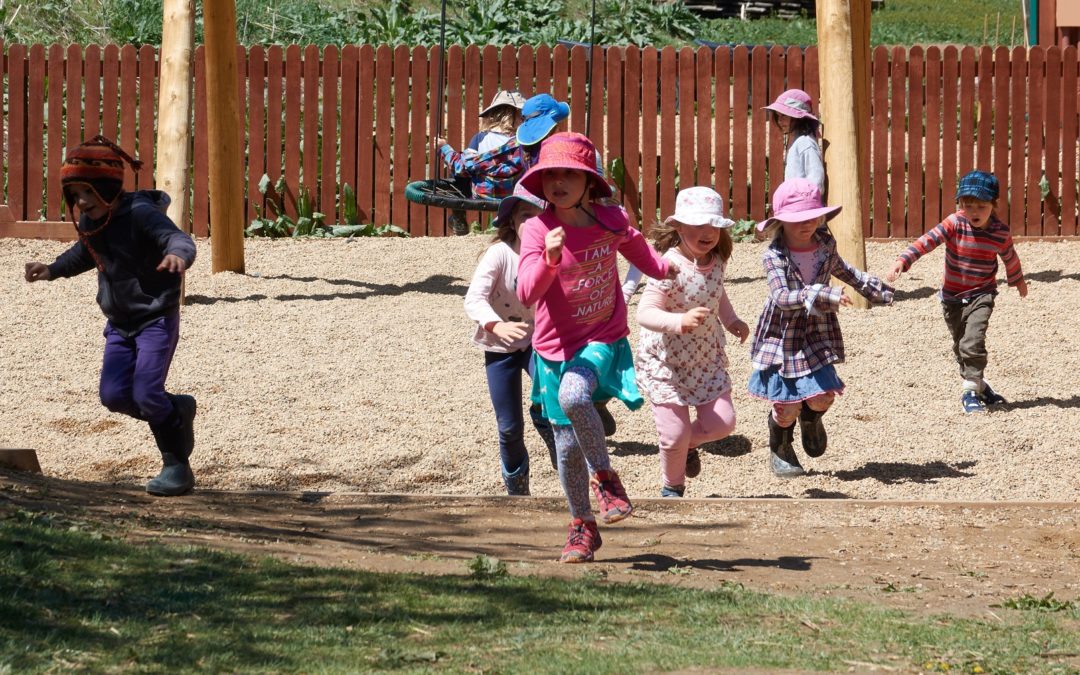
It’s Friday afternoon at Boulder Valley Waldorf School and there is a joyous bustle on campus as classes are dismissed. Parents plan play dates in the parking lot while 8th graders wave a warm goodbye to their 1st grade buddies. Kindergartners plead for a few extra minutes on the play yard and 5th graders munch on carrots they harvested during a particularly hands-on lesson in botany. On the horizon, the front range of the Rocky Mountains is illuminated by afternoon sunshine, and there is the distant rumble of a tractor plowing the fields on the far side of campus.
It’s an everyday moment, but one that reflects the human warmth and simple joys of being a part of the Boulder Valley Waldorf School community. Here, we know that children thrive, personally and academically, when they feel a sense of belonging at school. In the classroom and across our campus community, we place extraordinary value on building strong relationships between students, faculty, and families.
Social From the Start
For students, a sense of belonging at school begins in the classroom. From early childhood to 8th grade, classrooms at BVWS are close-knit, hands-on, and screen-free, intentionally designed to encourage strong peer relationships and healthy social-emotional growth.
Our human-centered approach to education begins in preschool and kindergarten, where teachers intentionally build a cohesive class community through group activities, like circle time, movement, games, stories, and singing. These activities are complemented by ample time for unstructured child-led play, fostering powerful social-emotional skills like self-regulation, cooperation, and collaboration. Conflicts, when they arise, are approached as teachable moments.
Even at an early age, students at BVWS begin to see themselves as part of a larger community, responsible for themselves and their shared environment. Simple chores, like sweeping the floor or helping chop vegetables on soup day, foster our students’ sense of social responsibility at school. Even snack time is a community-building project in which students learn to contribute by setting the table, saying a verse of gratitude, and waiting for their friends to be served before they eat.
Close-Knit and Collaborative Classrooms
At BVWS, the social learning environment doesn’t end when formal academic instruction begins. In elementary and middle school, collaboration, group work, and discussion are essential to teaching and incorporated across academic areas. Here, you’ll find 1st graders marching in unison as they practice their times tables, 3rd graders reading out loud to a partner on a rainy afternoon, and small groups of 6th graders working together to measure the perimeter of their classroom during a lesson in geometry.
Special curricular projects, like our annual class plays, provide an opportunity for students to hone their public speaking skills, creative expression, and memory while also contributing to a project in which everyone, quite literally, has a role. Likewise, learning to play an instrument—a discipline that is often praised for its array of cognitive and artistic benefits—is a vital opportunity for students to build rapport as an ensemble, requiring cooperation, collaboration, and the ability to listen carefully to others.
Our distinctly social approach to teaching fosters a strong class community and a sense of belonging among students; it also makes instruction more effective. Research shows that children are hard-wired to learn in social environments. Researchers have even found that students retain more of a lesson and take concepts further when working with peers.
Prioritizing Teacher-Student Relationships
Every morning in grades 1-8, teachers start the day by greeting each student individually, with a handshake and a smile. It’s a simple gesture with an important message: At Boulder Valley Waldorf School, every student is seen and valued.
Long-term studies have shown that strong teacher-student relationships provide significant benefits in the classroom—and beyond. As Waldorf teachers, our faculty have embraced a deeply human approach to education, which aims to nourish each child’s individual and holistic development.
It takes time to build strong and trusting relationships between teachers and students. For that reason, one of the most effective innovations in Waldorf education is looping, the practice in which the primary teacher stays with the same cohort of students over multiple years. At BVWS, we often have one teacher leading a class from 1st to 4th grade, and another teacher leading the class from 5th to 8th.
This model gives teachers an opportunity to truly see and understand their students over multiple years. It fosters a sense of continuity and trust within the classroom. It gives parents an opportunity to get to know their child’s educators, encouraging open communication and collaboration over many years. In fact, the practice has so many measurable benefits that it’s even gaining traction in mainstream schools.
A Family Partnership
It’s not by accident that every school year begins with our annual Parent Work Day and Welcome, when families, teachers, and staff come together to pull weeds, clean chalkboards, lay down paving stones, and take on other tasks in preparation for the first day of school. Together, our families model joyous working and social responsibility—and have some fun while they do!
Maybe it’s the fact that we share our campus with a working farm, or maybe it’s our rugged Front Range setting, but BVWS parents seem to bring an unusually large dose of initiative, verve, and a can-do spirit to our community. Parents are field trip chaperones, hike day volunteers, garden helpers, and enthusiastic fundraisers. Our parents take a leading role in planning events like the annual Harvest Festival—and they’re often willing to jump in to help whenever help is needed, whether that’s setting up chairs at Harvest Faire or running for a bandaid in the office.
And speaking of the recent Harvest Faire, our many beautiful festivals are the most exuberant expression of our community. Every year, we come together to celebrate the changing seasons through all-school festivals and special events, creating a joyous and predictable rhythm to the school year—and lasting memories.
A Place Where You Belong
At Boulder Valley Waldorf School, we know that children learn best and are most engaged when they are seen by their teachers and understood by their peers. More importantly, we know that learning to build and maintain healthy relationships is connected to overall happiness and a sense of purpose in life.
Can you imagine your family thriving at a school like ours? Sign up for a tour of our campus now!